Plan for about half a square foot per chick in the brooder, growing to a full foot by week three, then roughly 3–4 square feet per bird in the coop and 8–10 in the run. Those are confinement minimums. A foraging meat breed like the American Bresse needs ranging room beyond them, because for this bird range is part of the recipe.
How much space does an American Bresse need?
Every stage has its own footprint, and the number climbs as the birds grow. In the brooder, day-old chicks start at about half a square foot each and outgrow that fast — plan for a full square foot by the third week, because a crowded brooder is where the first problems begin. Once they move outside, the standard confinement guides are roughly 3–4 square feet per bird in the coop and 8–10 in an attached run. Those are sound minimums for keeping birds housed and healthy, and they are the same whether you are raising a Bresse or any other breed.
| Stage | Footprint to plan for | What it is for |
|---|---|---|
| Brooder, weeks 0–3 | ~½ ft² per chick, rising to ~1 ft² | Warmth, dry bedding, room before the outdoor move |
| Coop, grown birds | ~3–4 ft² per bird | Roosting, shelter, weather refuge |
| Attached run | ~8–10 ft² per bird | Daily outdoor room, the floor for a foraging bird |
| Range / pasture | As much as you can rotate | The forage that builds the breed's flavor |
That last row is the message of the page: for a Bresse, the coop and run numbers are only the floor, and the space that matters most sits beyond them.
Why a Bresse needs more than a broiler pen
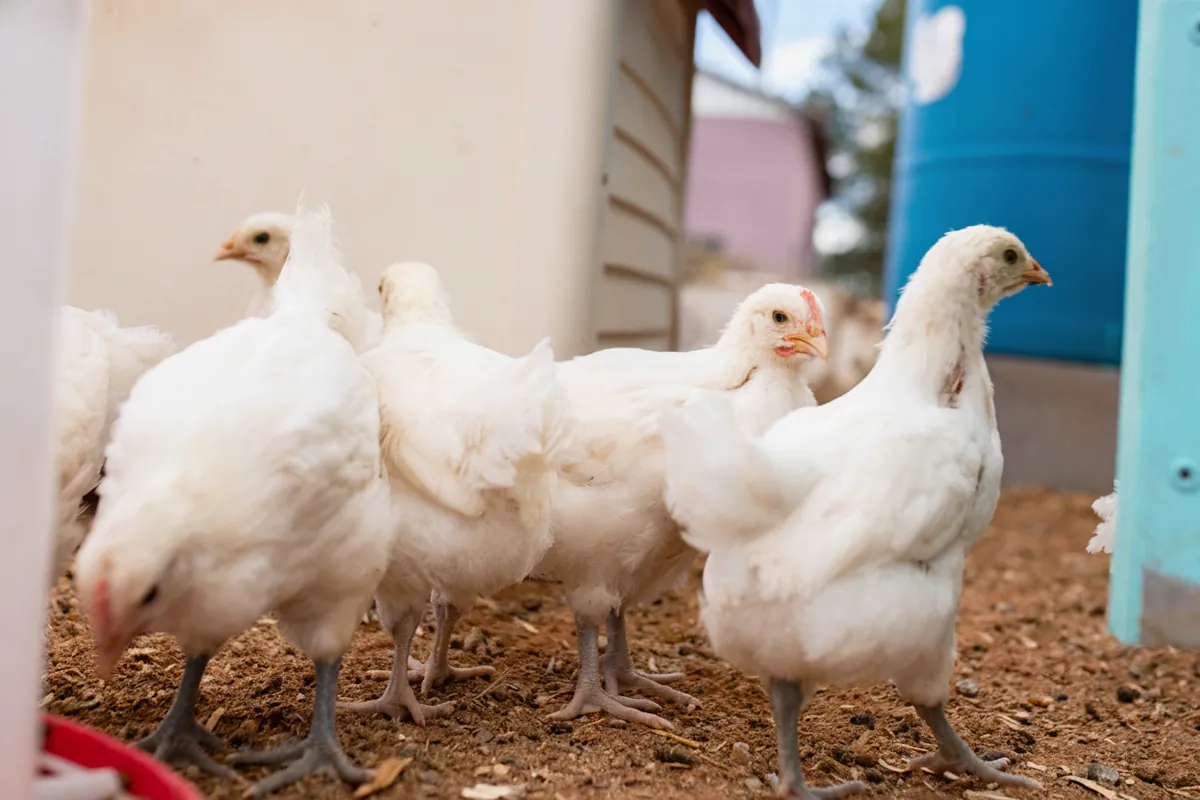
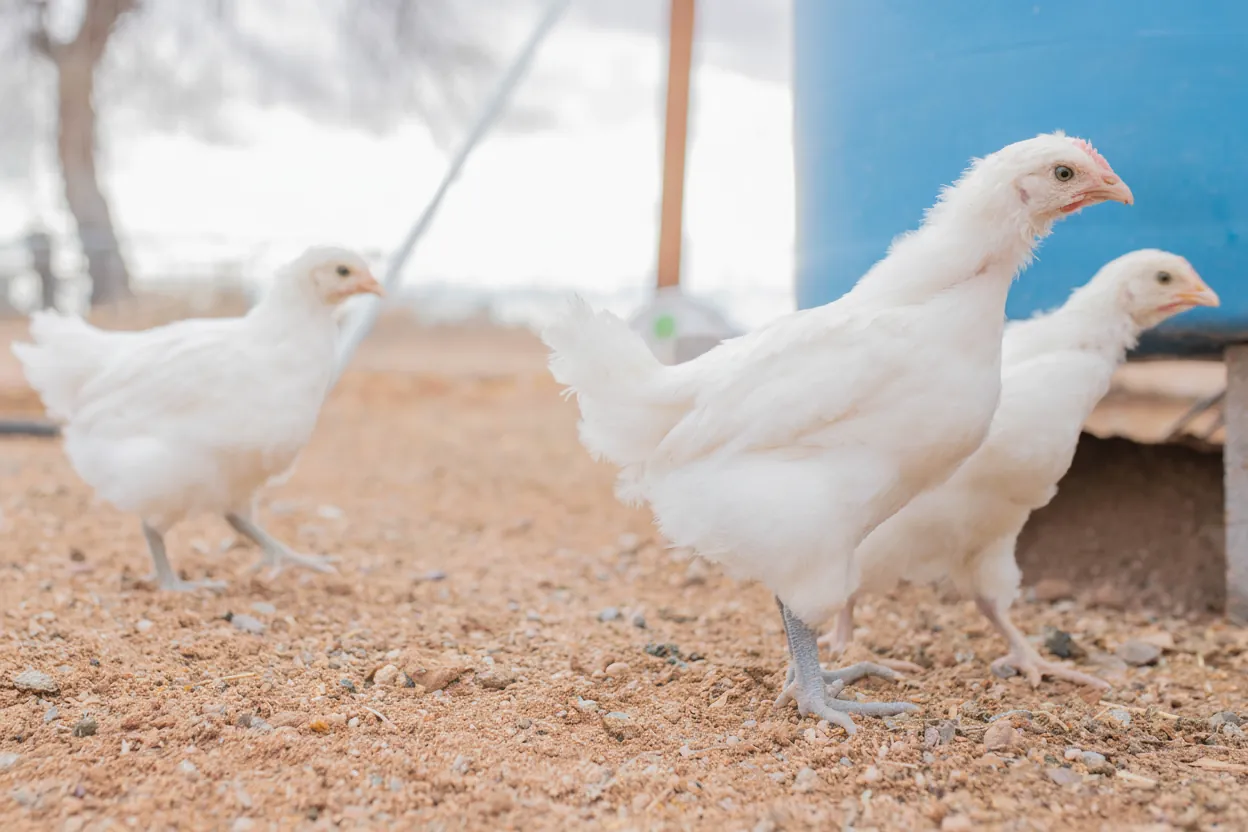
The reason is the bird itself: a Cornish Cross sits by the feeder, so pen space is the entire question, while a Bresse is an active forager that turns pasture into muscle and flavor — the breed trait France protected by law, and the one explained in full at AmericanBresse.com. That single difference is why the confinement numbers above, which are plenty for a bird that mostly stands still, are only the beginning for one that spends its day hunting.
So the run is only where the day starts. Beyond it the birds should reach into a paddock, rotated sections, or supervised free range — whatever your ground and your predators allow. Rotation is worth planning for from the start: it keeps forage fresh and worm loads down, and it is the difference between range that feeds the flock and a bare patch that just holds them. More fence for its own sake buys nothing. What matters is that activity and varied forage build the base flavor a good finish later enriches, and that base only exists if the space is there to grow it.
Does my ground have room for the flock I want? How much range does a foraging breed really need? Get Your Answers Live at the Weekly Coffee Hour Q&A.
Join the call on Monday (Free)Planning the footprint before the chicks arrive
Because space is a build you commit to once, the smart move is to size the flock to the room you have — not to pick a bird count and hope the yard stretches. A small backyard raises a small batch of Bresse beautifully when it offers rotated range or watched free time; the same yard packed with too many birds on bare ground gives you all the cost of the breed and none of the reward. Start from your ground and work inward.
Two neighboring decisions round this out. The space you can give shapes the cost of raising the flock, because more range means a smaller feed bill, and it changes what you will see at each grow-out stage, from the brooder move to full pasture. The everyday feeding schedule that turns all that room into forage lives on the feeding page. Set the footprint first, and the rest of the plan has something solid to stand on.
Take the guide with you
This chapter lands in your inbox with the rest of the guide: all 6 chapters. Then the working emails start, one job at a time: penciling the budget, switching feed phases on schedule, making the keep-or-table call. They run until a French-quality table bird comes off your own ground.
Space questions, answered
How much space does a meat chicken need?
Plan for roughly 3–4 square feet per bird inside the coop and 8–10 in an attached run, on top of about half a square foot per chick in the brooder that grows to a full foot by week three. Those are the confinement minimums. A foraging meat breed like the American Bresse needs ranging room beyond them, because range is part of how the bird is built.
Do American Bresse need more space than a Cornish Cross?
Yes, in the sense that matters. A Cornish Cross sits and eats, so pen space is the whole question. A Bresse is an active forager that spends its days hunting, so coop and run minimums are only the floor — the bird also needs pasture or rotated range to become what the breed is meant to be. The extra space is part of the recipe.
How big a run do meat chickens need?
About 8–10 square feet per bird is a sound attached-run minimum for confinement, but for a foraging breed the run is only a starting point. The birds should reach beyond it into a paddock, rotated sections, or watched free range. Match the reach to your predator pressure — the goal is fresh forage without leaving birds exposed.
Can you raise meat chickens in a small backyard?
You can, if you size the flock to the space rather than the space to a flock you already pictured. A small yard raises a small batch of Bresse well when it offers rotated range or supervised free time. What does not work is crowding a foraging breed onto bare ground — that gives you the cost of the bird without the flavor that justifies it.