Three things drive the cost of raising a Bresse: the stock, the feed, and a one-time setup. Chicks typically run about $10–15 each, feed is the biggest ongoing line because the bird eats across four-plus months, and the brooder, coop, and fencing are a build you reuse for years. Plan on 14–19 weeks to a finished table bird. The single biggest swing is how well you range them.
What does it cost to raise an American Bresse?
The bill lands in three buckets, and only one of them is a surprise to most new keepers. The first is stock: day-old chicks typically run about $10–15 each, with hatching eggs cheaper per bird but less certain, and started birds more. That is a firm number, and the smallest one here. The second is a one-time setup — a brooder, a coop, feeders, waterers, and fencing. It feels big the first spring and then disappears, because you reuse it flock after flock for years.
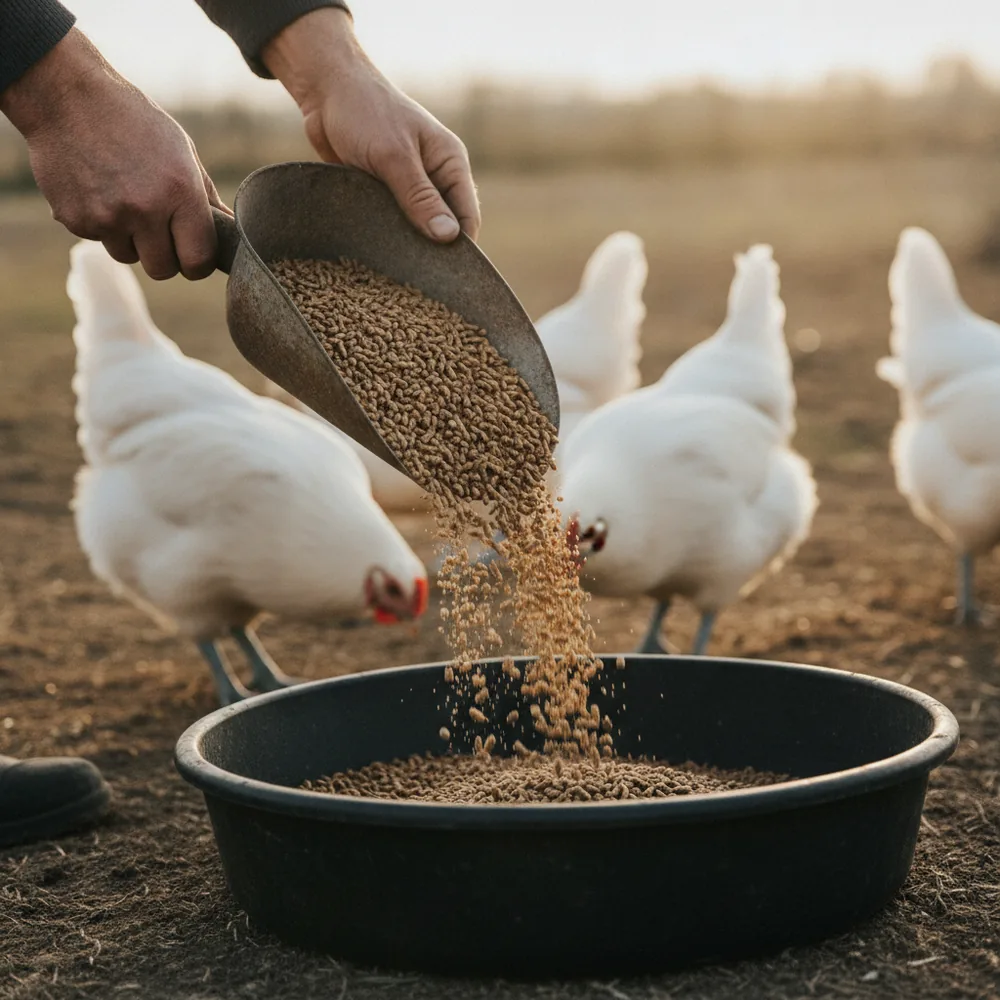
The third bucket is the one that decides everything: feed. It is the biggest ongoing cost, not because the bags are exotic, but because a Bresse eats across four-plus months instead of the eight weeks a commercial hybrid takes. The exact rations, protein levels, and phase changes are a subject of their own on the feeding page — but for budgeting, the headline is simple: feed is where your money goes, and how well you range your birds is what moves that number up or down.
Your own time is the fourth, unpriced line. It is not large — daily chores are minutes, not hours — but it runs longer than a broiler's, and it is worth counting before you start.
Why the calendar runs longer than a broiler
A Cornish Cross is done in about eight weeks. An American Bresse finishes at 14–19, and that gap is most of the cost. Every extra week is a week of feed and a week of your attention, and there are more than twice as many of them. The bird grows slowly on purpose — that slow growth is what builds its fine bone and marbled meat, a breed story told in full at AmericanBresse.com. The extra money buys the extra months.
What the longer calendar does not come with is a deadline. A commercial broiler must be processed close to schedule or you lose birds to their own weight. A Bresse held a week or two past its window costs you only a touch of tenderness. That single difference takes the pressure off the whole budget: a busy week never turns into dead birds, and the schedule can flex when life does. The stage-by-stage picture of what those weeks look like lives on the grow-out stages page.
What will this flock actually cost me? Do the numbers pencil out for my setup? Get Your Answers Live at the Weekly Coffee Hour Q&A.
Join the call on Monday (Free)So is it worth the money?
That one is a judgment call, and it deserves a plain frame. The forage credit is the reason the feed bill is smaller than the long calendar implies: from the middle weeks on, a well-ranged flock replaces part of the bag with bugs and greens it hunts for itself. Keepers who range hard and finish carefully spend the least per bird. Keepers who leave a full feeder out on bare ground pay the most and taste the least difference.
So the cost question folds back into two others: how much room you can give the birds, which shapes both housing spend and the forage credit, and how the stages are managed. Both have their own pages — the space a meat flock needs and what each grow-out stage looks like. Read the money here, then read those two, and the budget stops being a guess. Nobody will tell you a Bresse is cheap. Raised well, though, it is worth what it costs, and that is a better thing to know before you start.
Take the guide with you
This chapter lands in your inbox with the rest of the guide: all 6 chapters. Then the working emails start, one job at a time: penciling the budget, switching feed phases on schedule, making the keep-or-table call. They run until a French-quality table bird comes off your own ground.
Cost and timeline questions, answered
How much does it cost to raise a Bresse chicken?
Budget for three things: the stock, the feed, and a one-time setup. Day-old chicks typically run about $10–15 each; feed is the largest ongoing line because the bird eats across four-plus months; and a brooder, coop, and fencing are a one-time build you reuse for years. The single biggest swing is how well you range them, since good forage lowers the feed bill.
Why does a Bresse cost more to raise than a Cornish Cross?
Because it lives longer before the table. A commercial meat hybrid is done in about eight weeks; an American Bresse finishes at 14–19. More weeks means more feed and more of your time. You are buying months and management, not a faster machine. What you spend on those extra weeks is what shows up as flavor on the plate.
How long does it take to raise a Bresse to the table?
Plan on 14–19 weeks from hatch to a finished table cockerel, with pullets reaching point of lay a little later. That is the calendar reality worth budgeting around. There is no hard deadline the way there is with a commercial broiler — a bird held a week past its window costs you only a little tenderness, never the flock.
Can you make money raising American Bresse?
Some keepers sell started birds, hatching eggs, and breeding stock to cover their costs, but the first answer is that most people raise Bresse for their own table and for the breed. Whether the numbers pencil out depends on your feed bill, your range, and your local market. The math is a planning conversation, not a promise.